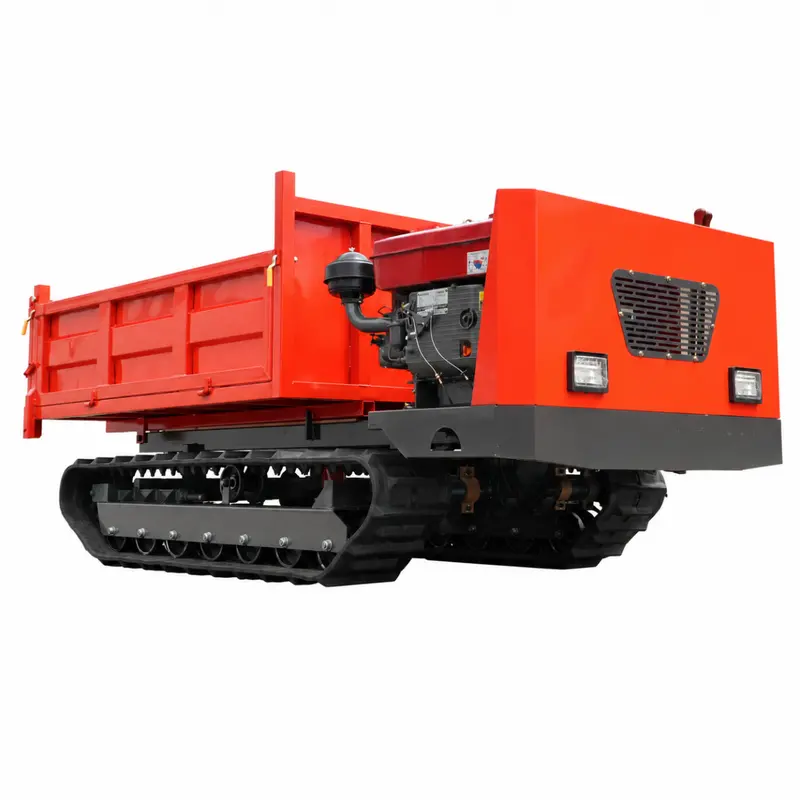
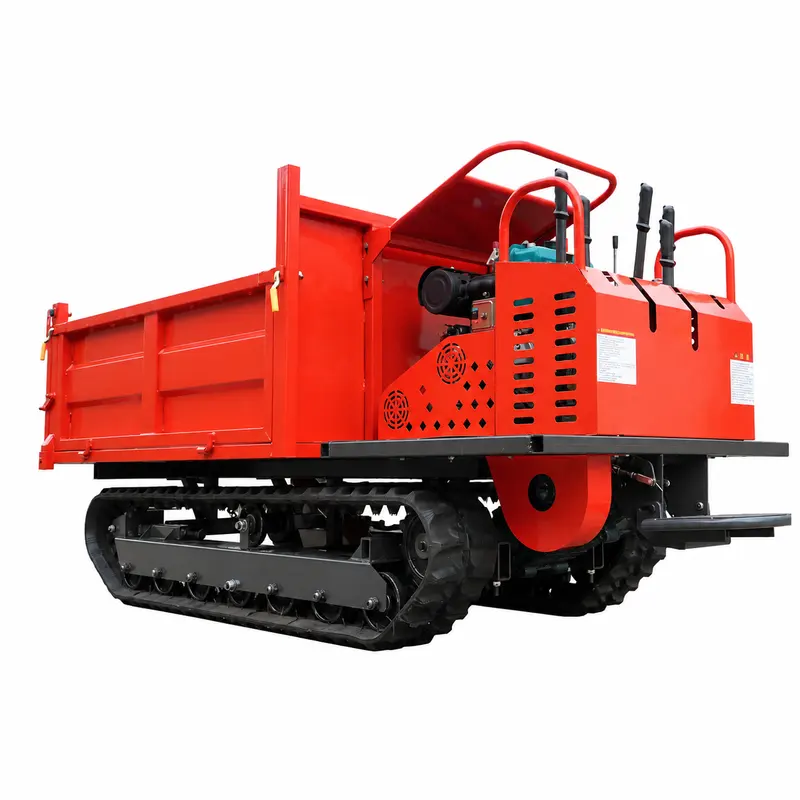
The red cargo box retains its visible panels, tailgate and latches for carrying bulk site materials.
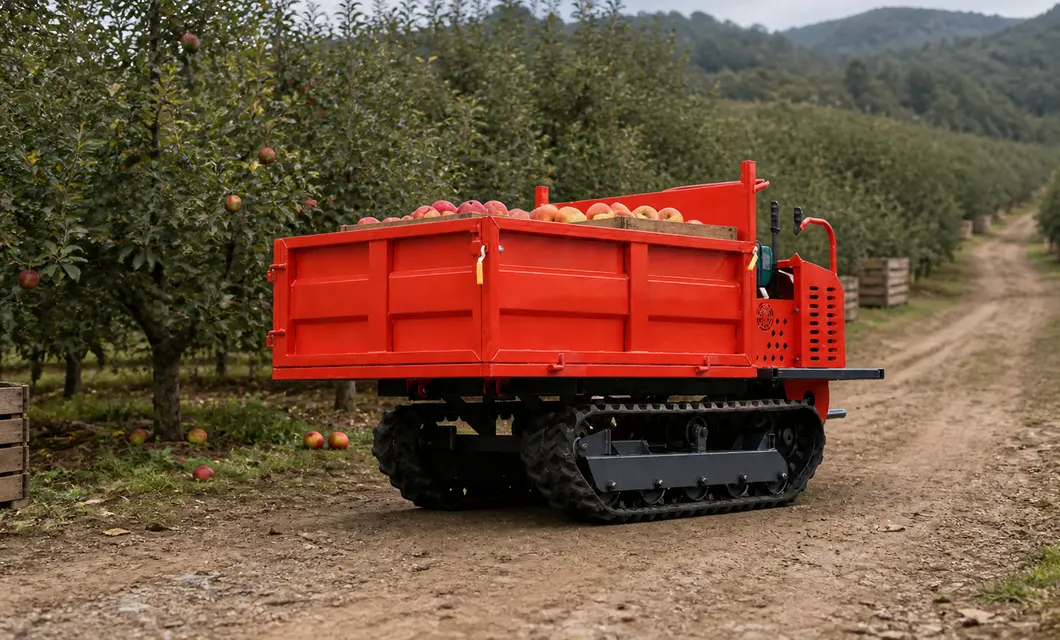 orchard-slope-transport

Walk-Behind Tracked Carrier
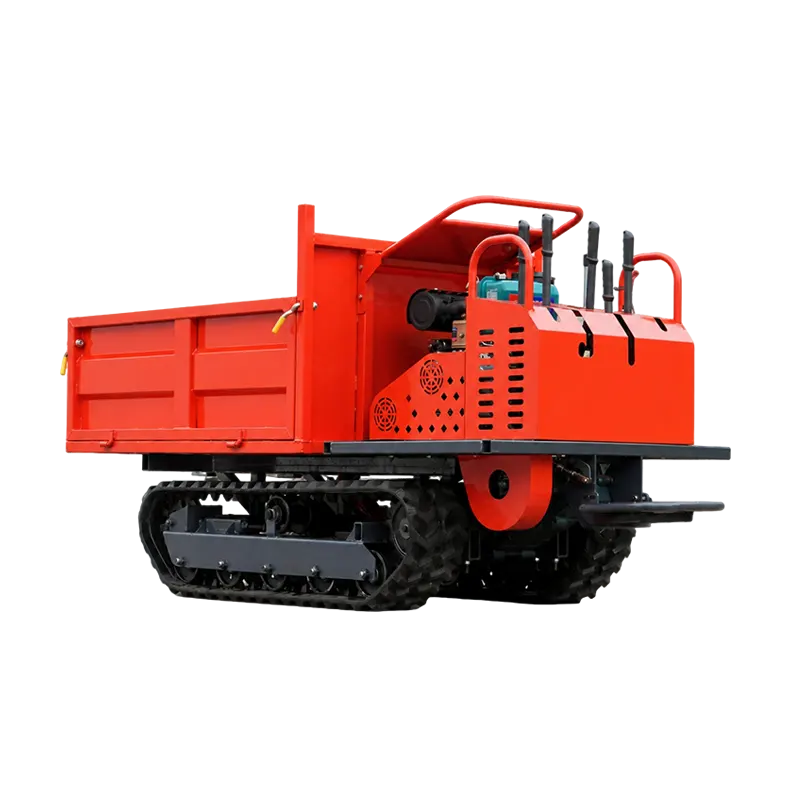
A walk-behind tracked carrier for moving materials over confined or uneven routes, combining a rated load with a compact tracked chassis.
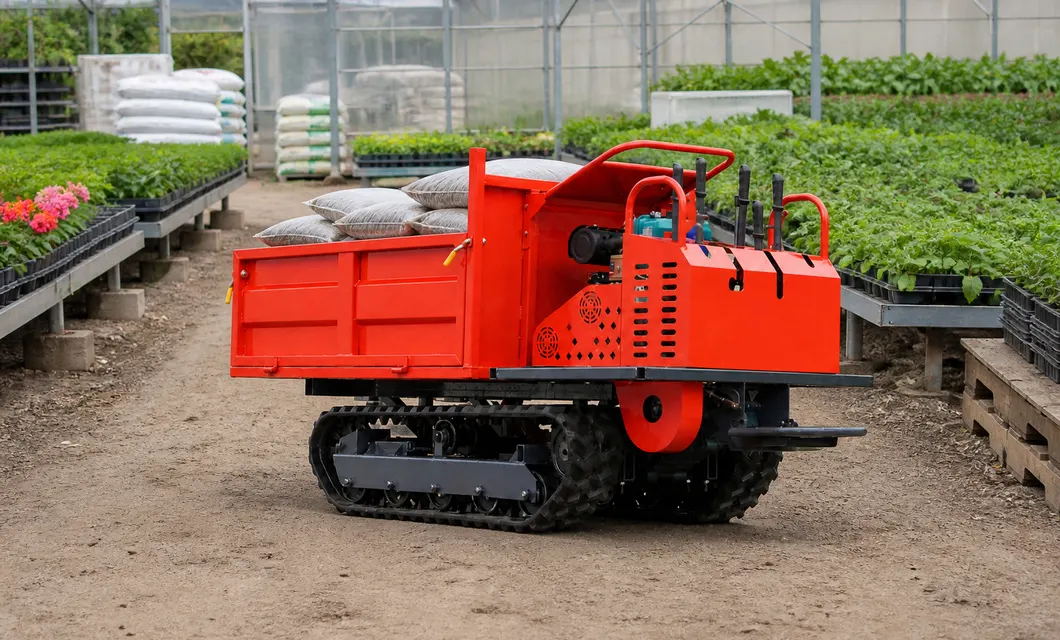 greenhouse-supply-transfer
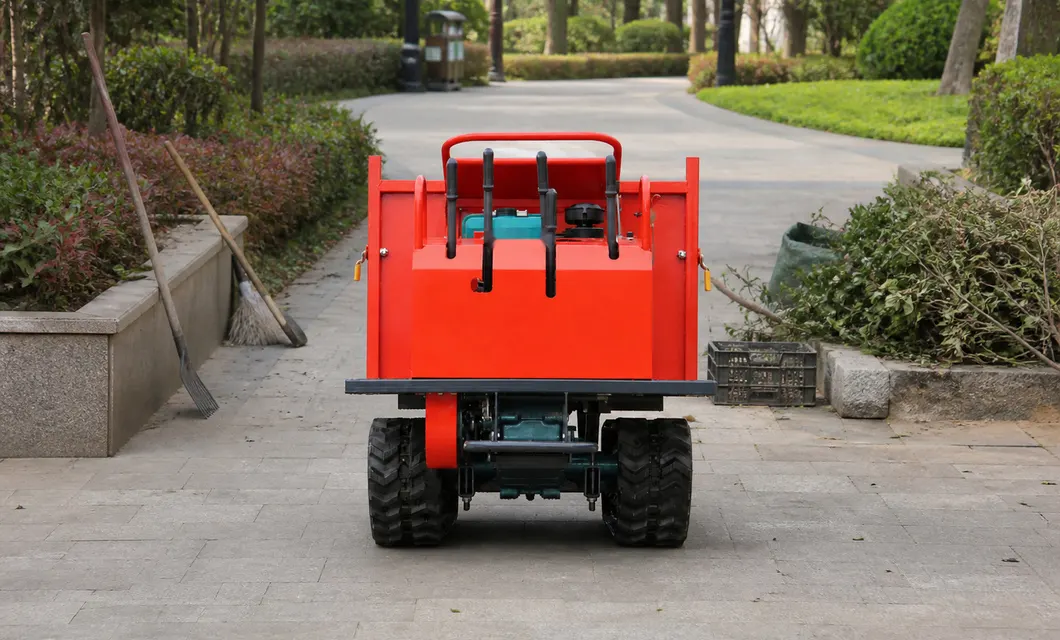 municipal-landscaping-transferorchard-slope-transport
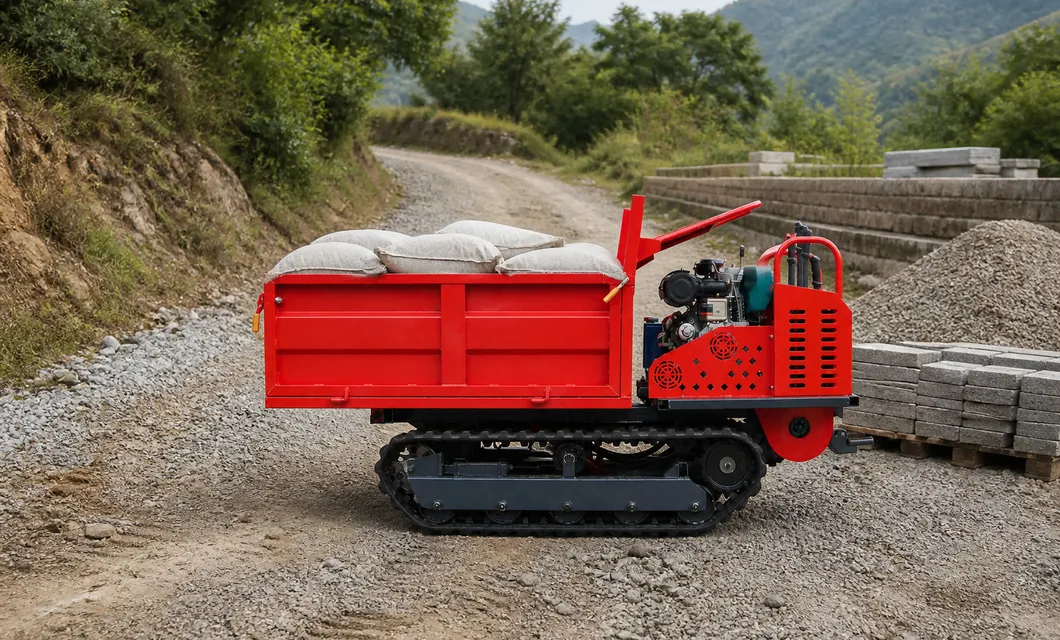 rural-path-constructiongreenhouse-supply-transfermunicipal-landscaping-transfer
1.5-ton walking tractor - Test - Tipper
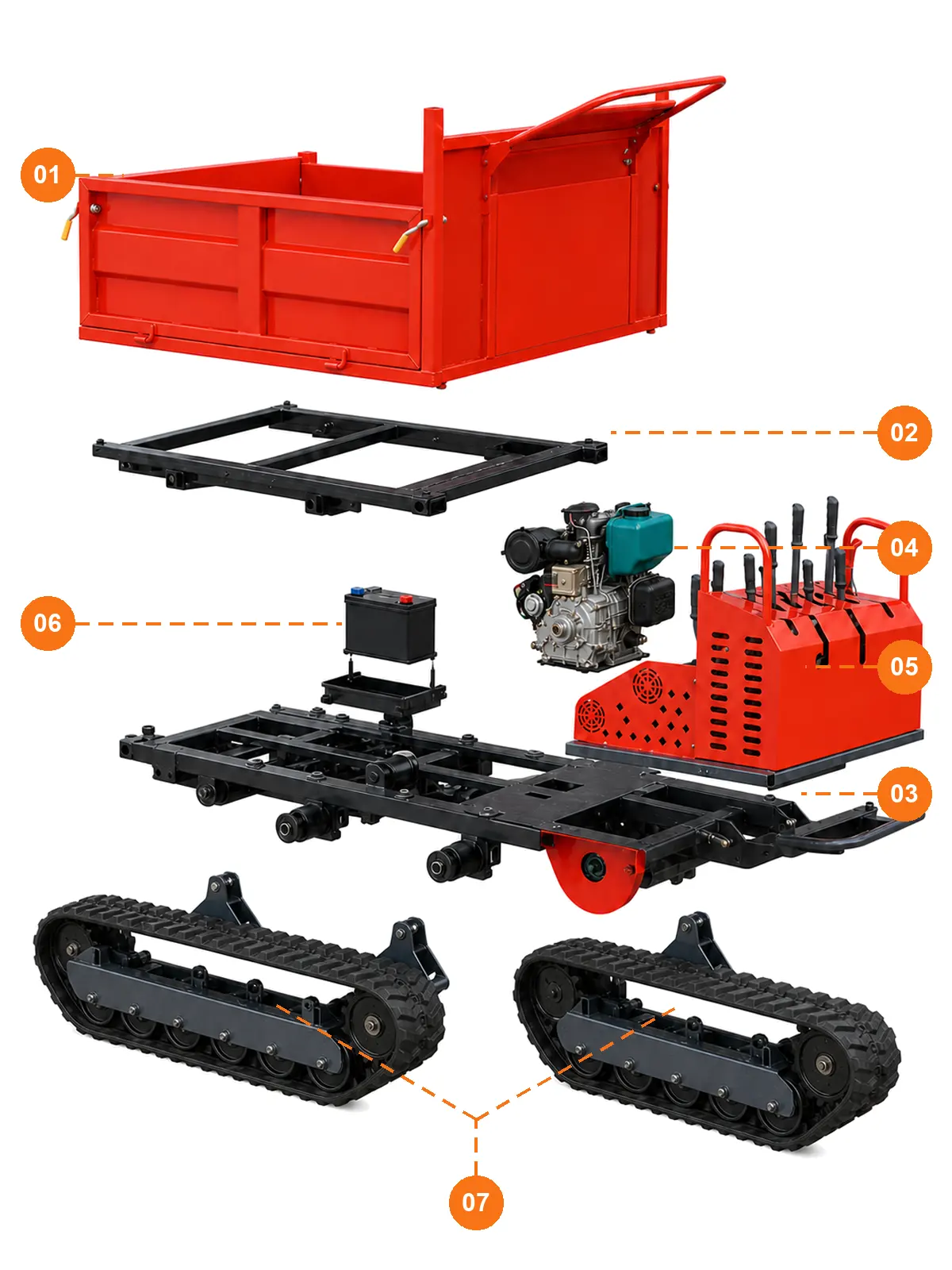
The red cargo box retains its visible panels, tailgate and latches for carrying bulk site materials.
The black upper frame supports the cargo box and preserves its confirmed mounts and hinge positions.
The central chassis aligns the power, control and track modules on the carrier's real structure.
The visible air-cooled diesel engine supplies power while retaining its confirmed external housings.
The front console groups the hand levers, guards and operating position used by a walking operator.
The starter battery lifts from its tray and provides electrical starting power to the engine.
The matched track pair carries five reinforced road wheels per side for stable ground contact.
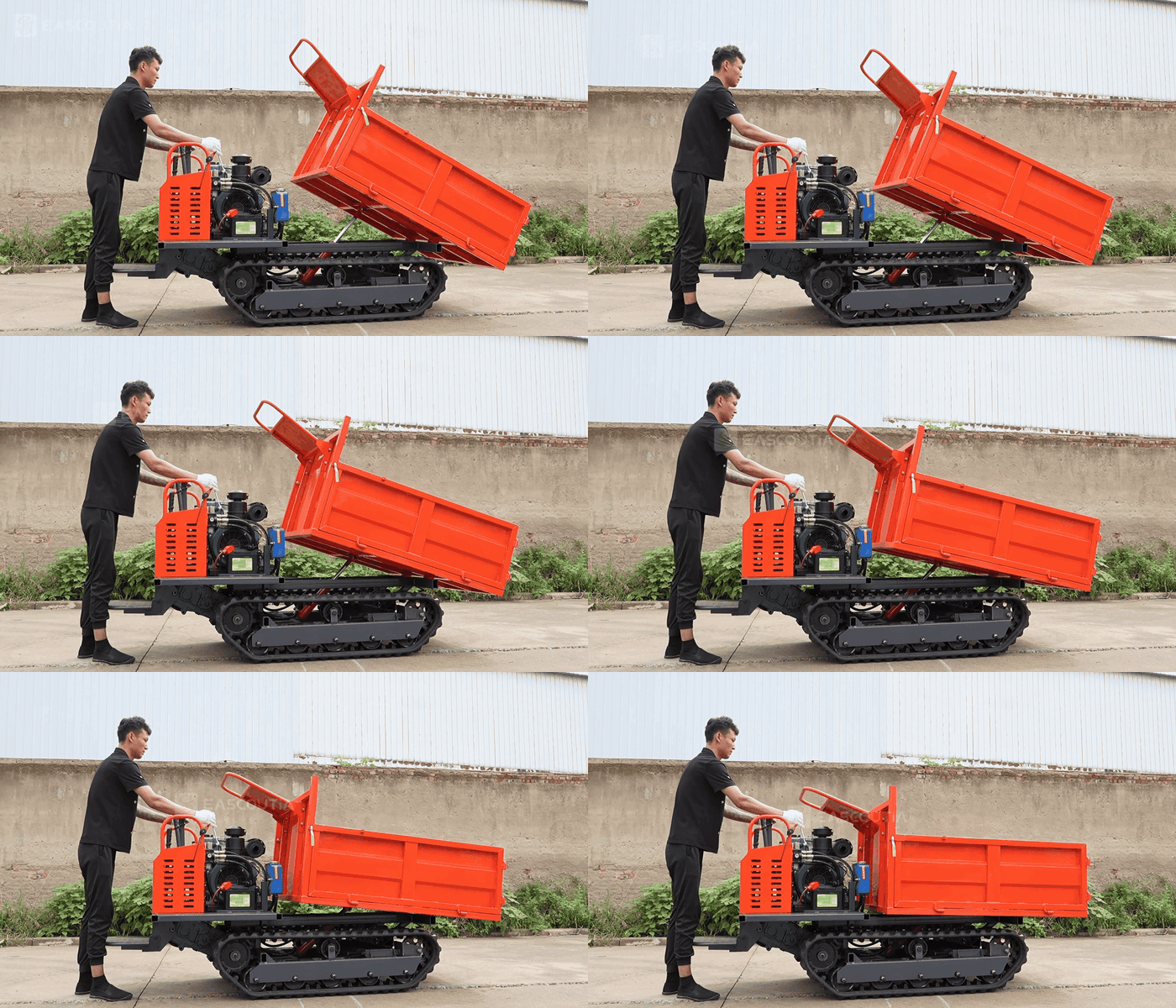
1.5-ton hand-guided display. Compact design, tracked chassis, easy material transport on rough terrain.
00:181.5-ton hand-guided display. Compact design, tracked chassis, easy material transport on rough terrain.
00:291.5-ton manual operation. Simple control, strong grip, easy material transport on slopes.
Real on-site records from our factory, offering a practical view of our production capability and delivery readiness.
We centrally purchase equipment, test the data and the machine, then publish the models that clear our review. You get a shorter path from "could work" to a quote your team can act on.
Our team is ready to advise you on the best product configuration and procurement plan.
yiyunying2026@163.com400 158 58991. It is commonly used for industrial parks, logistics routes, worksites and managed fleet operations, subject to the selected model and site conditions.
2. Match payload, dimensions, axle or tire specification, powertrain, route and regulatory requirements to the actual workload and operating environment.
3. Confirm model, color, payload, axle or tire specification and optional equipment, then verify the response time and any special requirements.
4. Prepare delivery inspection, approved registration where applicable and scheduled tire, brake and fluid checks; follow the manual for operation, inspection and routine maintenance.

 Simplified explanation