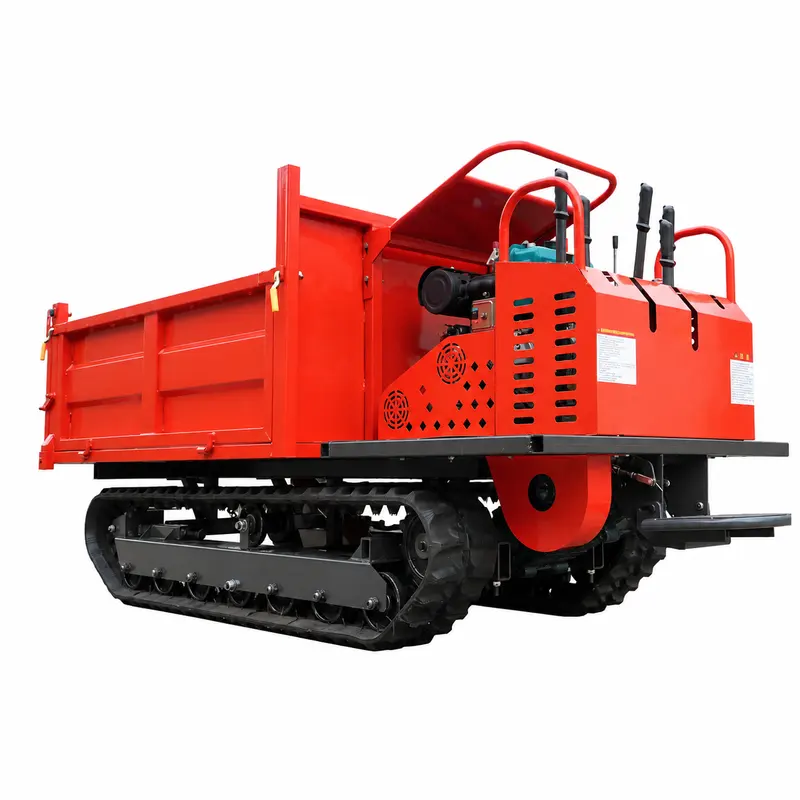
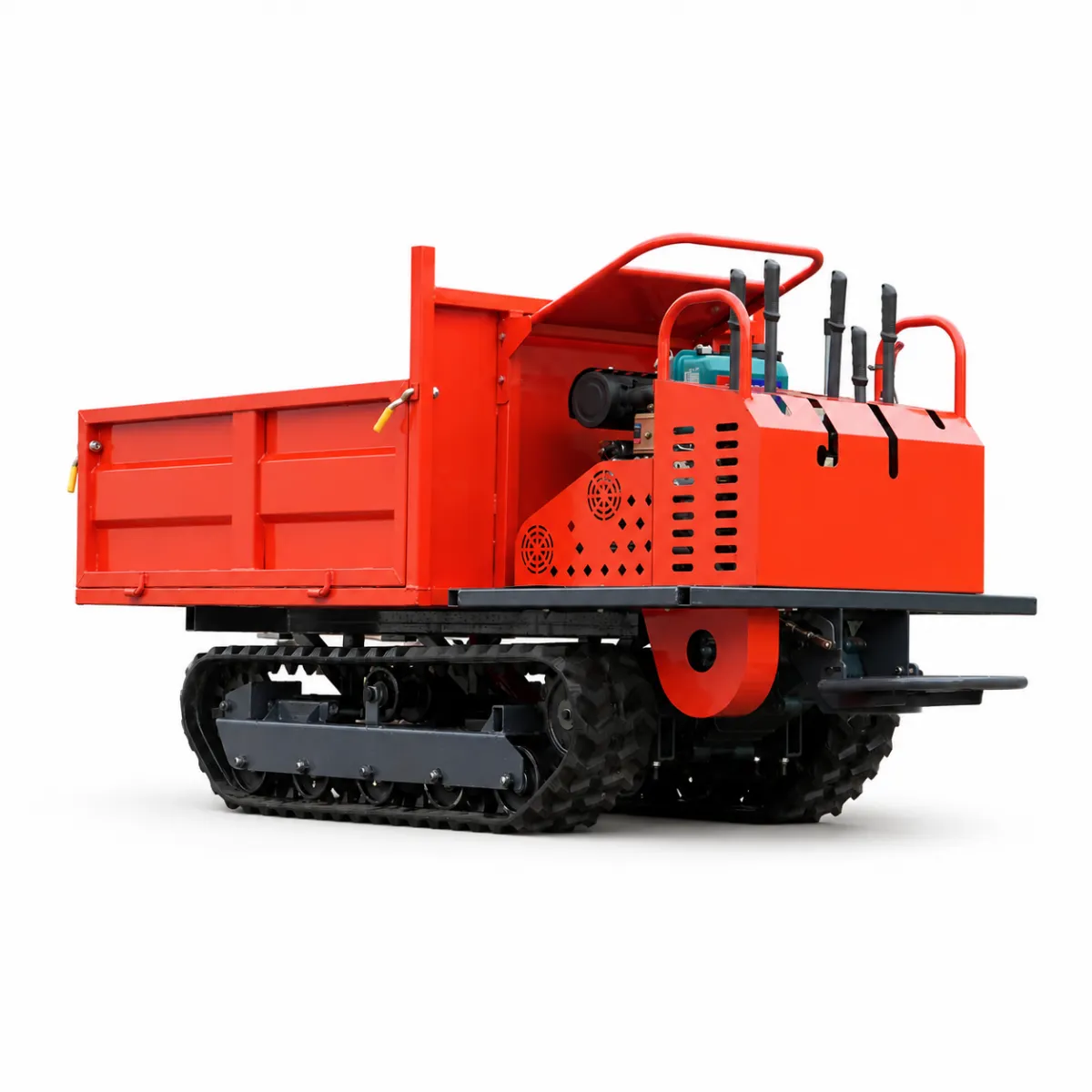
The red steel bed forms the main load body and separates upward and slightly rearward.
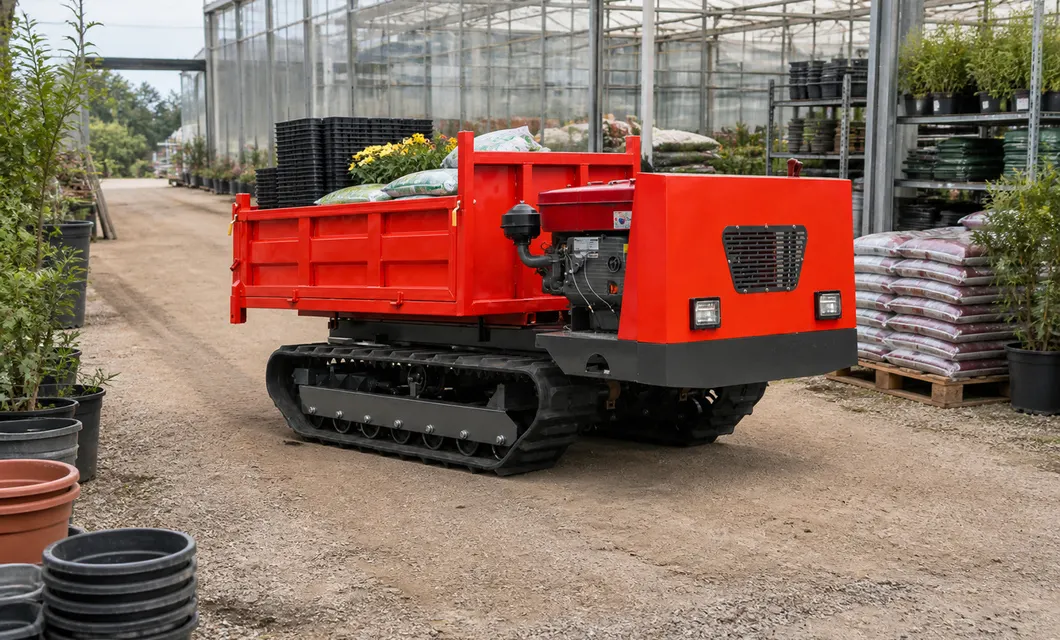 greenhouse-supply-transfer

Ride-On Tracked Carrier
This ride-on tracked carrier moves bulk materials with a steel cargo bed, rubber tracks, seated controls, and diesel power.
 construction-material-yard
 fence-maintenance-routegreenhouse-supply-transfer
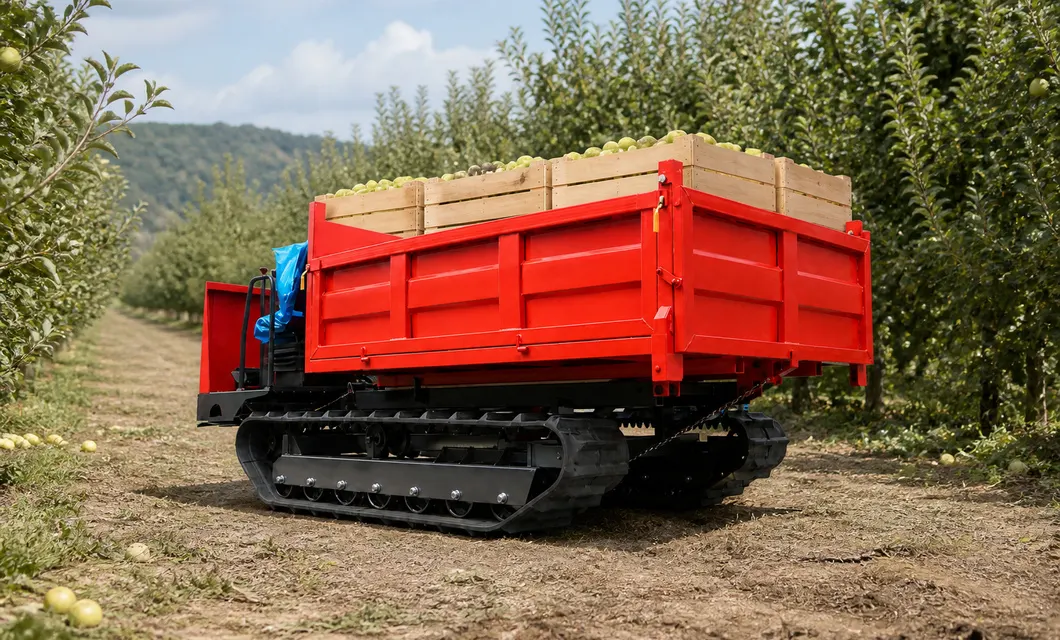 orchard-harvest-transportconstruction-material-yardfence-maintenance-route
2-ton vehicle - Test - Tipping
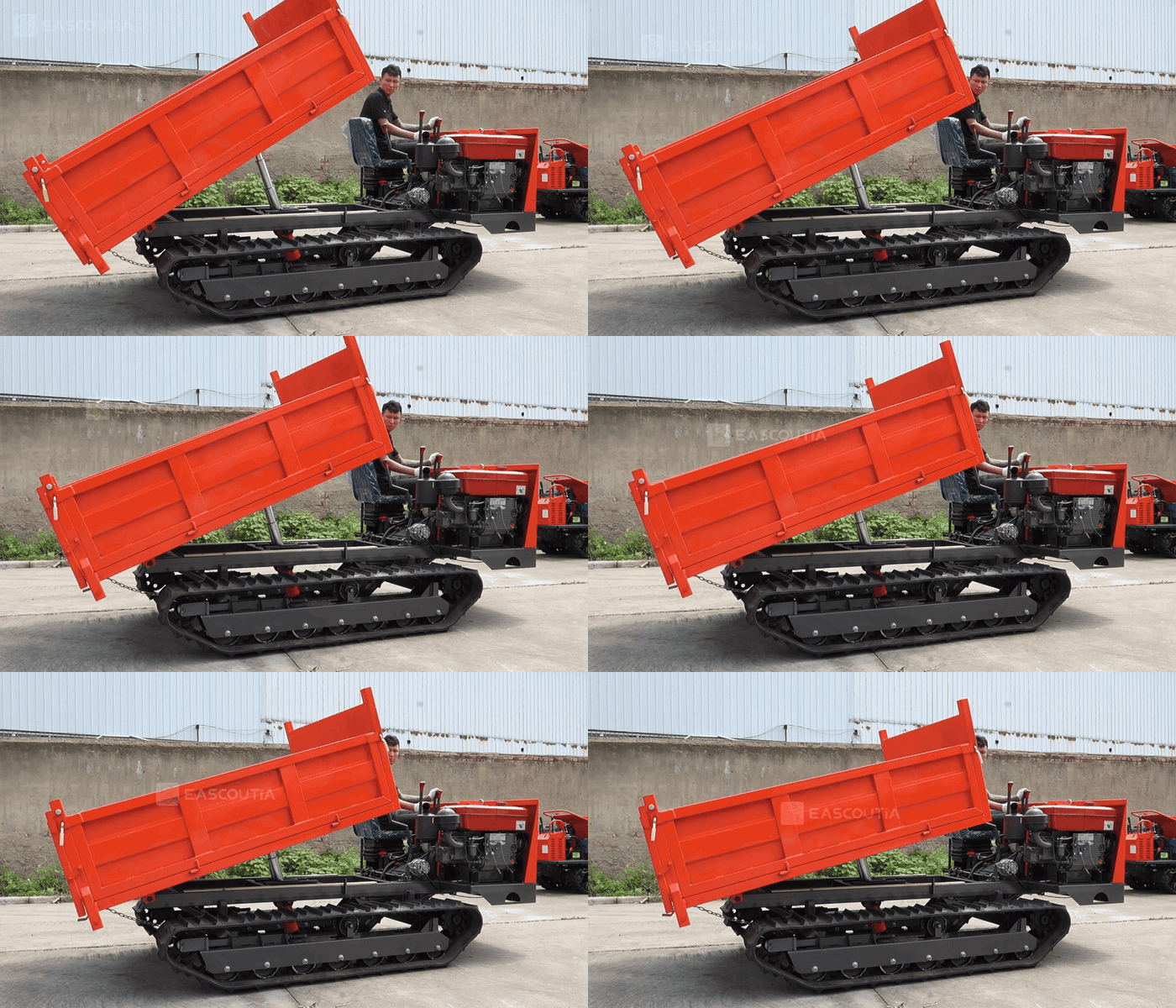

The red steel bed forms the main load body and separates upward and slightly rearward.
The visible rear gate closes the cargo bed and separates rearward along its hinge line.
The verified subframe supports the bed above the chassis and preserves its tipping geometry.
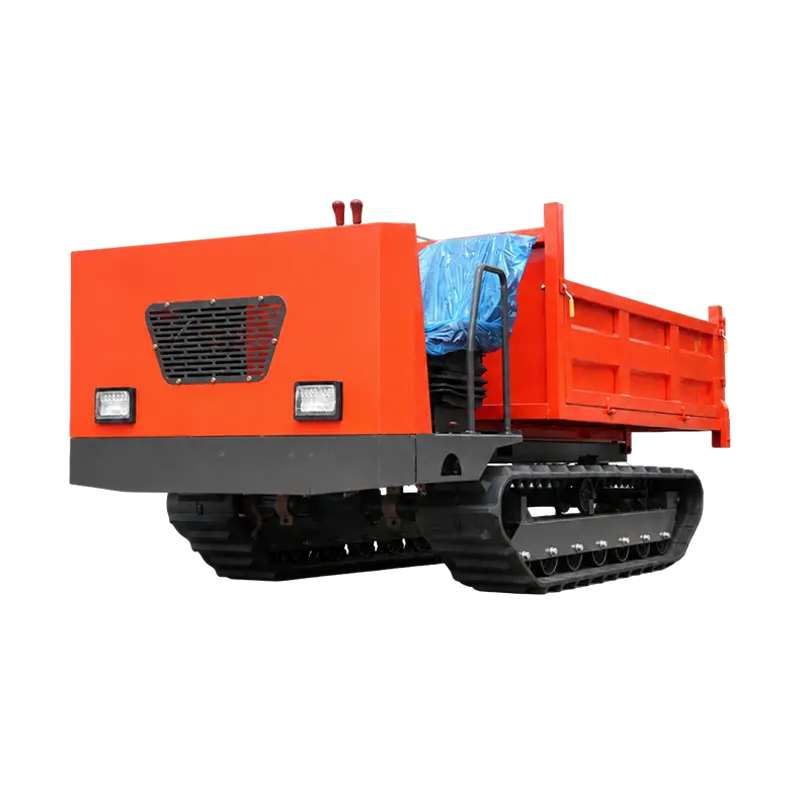
The blue seat, platform and visible control levers form one confirmed operator station.
The red hood, lamps and confirmed visible power casing form one connected front assembly.
The bare structural chassis rails connect upper modules without engine or crawler parts.
The paired rubber-track units support travel and separate laterally as one numbered assembly.
2-ton rider‑type forklift exterior display. Sturdy body, wide view, efficient for warehouse loading.
00:222-ton rider‑type forklift exterior display. Sturdy body, wide view, efficient for warehouse loading.
00:322-ton ride-on operation demonstration. Powerful, agile steering for stacking and material handling.
Real on-site records from our factory, offering a practical view of our production capability and delivery readiness.
We centrally purchase equipment, test the data and the machine, then publish the models that clear our review. You get a shorter path from "could work" to a quote your team can act on.
Our team is ready to advise you on the best product configuration and procurement plan.
yiyunying2026@163.com400 158 58991. It is commonly used for industrial parks, logistics routes, worksites and managed fleet operations, subject to the selected model and site conditions.
2. Match payload, dimensions, axle or tire specification, powertrain, route and regulatory requirements to the actual workload and operating environment.
3. Confirm model, color, payload, axle or tire specification and optional equipment, then verify the response time and any special requirements.
4. Prepare delivery inspection, approved registration where applicable and scheduled tire, brake and fluid checks; follow the manual for operation, inspection and routine maintenance.

 Simplified explanation